Wednesday, August 26, 2015
On converging stories and hearing voices
I grew up with an intermittent longing to play piano. Not until I got older, however, did I hear songs - or snatches of them - in my head, like the words on the tip of the tongue, not quite formed. If I was near a piano, I would sit down and let my fingers rest on the keys, poised between mounting desire and frustration, consumed by my inability to give musical expression to what I was hearing.
Sometimes, the same is true with writing. The difference is, it carries a heavier weight, deeper pain, greater cost, to not find expression. Instead of hearing music, I hear voices; voices inaudible to all but the ears of the soul. These days, the core of who I am feels inextricably bound with giving voice to what I'm seeing, hearing, sensing, in the world around me and how it intersects with mine.
I grasp for words, not unlike I've done many times as a writer in the past. And at the same time, utterly unlike any grasping in the past.
There's an urgency to what I find myself compelled to write.
There's an overwhelming lack of words to wrap around it all, to know where to even begin.
There are two stories converging, parallel voices. I am seeing the transition and turmoil of my inner world reflected back to me in the natural world I fiercely love. It's as if we're both groping along in the dark, clasping hands tight, in this journey together for better or worse. To hear one speak is to know, in some facet, a curve of the other, for we belong to each other. But I am the one with a voice that carries through the noise of a human-centric world.
And there's confusion and fear, over whether it should all tumble out as a rant or dirge, prophet or poet, mystic or madwoman, another voice drowned out among the many. As if there's only one way this voice should sound, instead of the natural rise and fall of inflection and tone and cadence and style that voices tend to have throughout the telling of a story.
It feels too big, too vulnerable, too painful, too unresolved. Too sacred to do justice to the depths of beauty and raw ugliness of it. So much so, these days, I don't even want to try.
It's a magnificent, terrifying racket in my soul and I fear that, sitting down to write it, I'll once again find my fingers on the keys with no sound coming out.
But still, I try. I begin here, and I begin again and again, as many times as it takes to start. And when words fail, as they often do, I come with pictures.
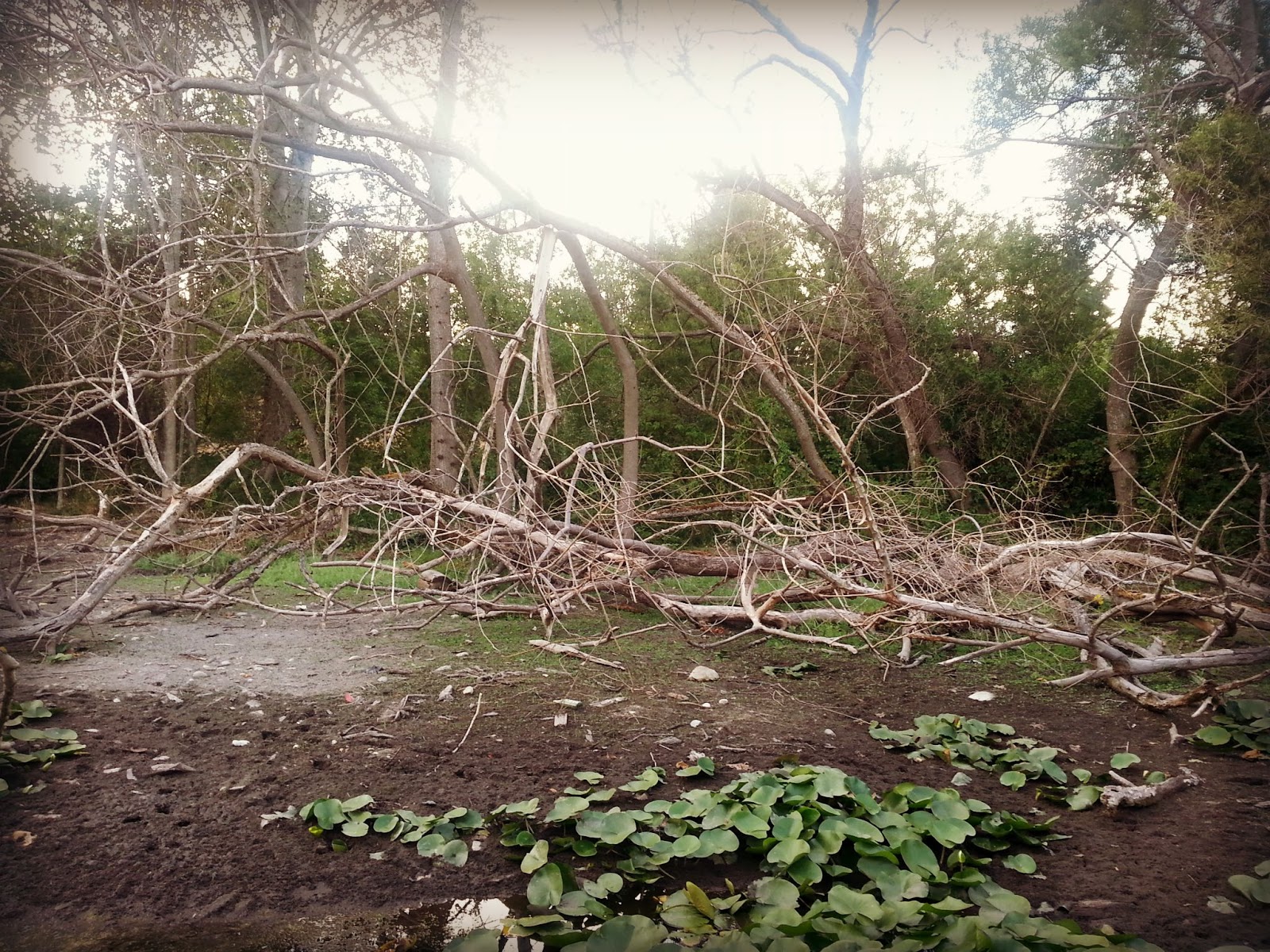
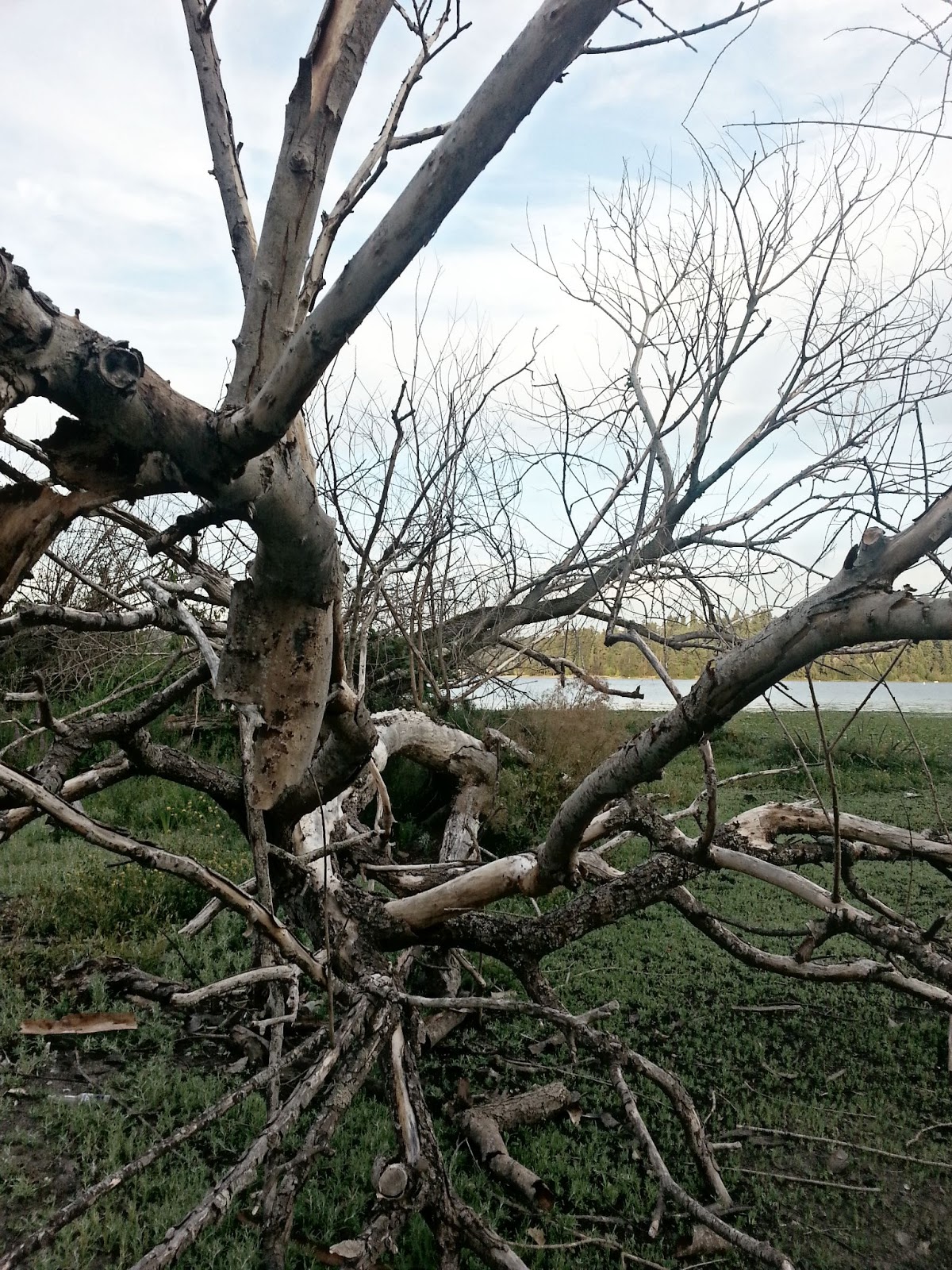
These images come from one of my favorite places in all of Seattle, down by a corner of the lake in the neighborhood I call home. After a mild, dry winter and a hot, dry summer, we are in the midst of drought, ravaged by numerous wildfires in other parts of the state. I choose to let these have the final words of this post today, as I have no way of wrapping things up neatly.
And neither do they.
Monday, August 10, 2015
As ash in the wind: On long goodbyes
This scattering was to be our goodbye. I knew in my heart, somehow, it wasn't mine. Not yet.
When I saw his ashes, I couldn't believe how they looked like sand. Sand in an hourglass, bleached white; I'd been prepared for them to resemble the remains of a fire. It was surreal, seeing him reduced to nothing more than what fit in a modest plastic bag, to hold him in my hands, to feel him slip away.
I took a portion of him home, in the beautiful ceramic urn I bought a month after he died, at Saturday Market in Portland. It's sat empty for all these years on my wooden chest, waiting to hold him. Waiting, for who knows what.
* * * * *
I will forever remember him in a handful of cashews.
Buried in the chest of artifacts of Papa is a plastic bag of cashews nearly seven years old. I brought it home from Guatemala, from the peddler shuffling the streets of Panajachel along Lake Atitlan. He approached our table, four of us girls, as we sat dining outside with our cheap wine and flan, hauling his sacks of roasted nuts to sell. I answered him quickly, as I'd grown accustomed to doing, "No gracias, SeƱor."
He didn't press us further, didn't hardly seem to register us, as if he were suspended between one world and another, then turned and walked away.
Papa had been less than two months dead. He hadn't yet shown up in my dreams, but I caught my first glimpse of him sitting on the steps of an open shop at the end of this day. Wearing a familiar tattered green sweatshirt, white socks, black shoes, sacks of roasted nuts at his feet. This memory of him is a watermarked photograph, singed around the edges.
We passed him by as the darkness spread through streets, hurrying back to our hotel. And he, wearing the weight of the day, of life, of dejection, of who knows what, on his shoulders, sunk into me.
I turned back to him with haunted eyes, this ghost of my Papa in the flesh of a Guatemalan man on the steps.
His name was Fransisco.
This time I really looked at him, looked at the lines on his face and deep into those weary eyes with cracks of light filtering through. I looked until my soul broke through its windows, spilling down my cheeks. Until I had to turn away. But not before I bought a handful of cashews with the remainder of my coins from the day and we locked eyes for a moment, and he smiled, faint and piercing, into my pain.
Back at our hotel, I excused myself and disappeared in the dark lobby, pressed into a corner, doubled over in waves. A flash flood of grief and questions.
* * * * *
It's not normal, I think, to catch his reflection, like a peek of his nose or bat of his eye, a swath of his skin, in such unlikely places. In such unlikely people. Because it's troubled me. Since that day of meeting Fransisco, I've only ever seen Papa in the faces of homeless men. Impoverished men. Men bent over, hidden in quiet masks of sadness. This is not how I wish to remember him.
But while the Papa of my childhood is fuzzy and nostalgic, endearing and hauntingly distant, the Papa of my adolescence and young adulthood is mangled, crushed in spirit, an ache in my gut. He is a storm battered ship, leaning into the wind, even as the hull is cracking. He is a set of blank journals, like those left behind by her mother in Terry Tempest Williams' When women were birds, speaking volumes and mysteries in the absence of words. This is how he's come to me. As if I've been entreated by the grief he left behind - his lonely ache, his unfinished dreams, his hopes deferred, his unspeakable pain - to see what he bore. To bear witness. To lay his pain to rest, as we have his ashes, save for the ceramic urn of what remains of him on my wooden chest.
I didn't know all these years, the depths of layers of grief. How his grief has haunted me in a cast of many faces. And I've searched to see him, to listen to these faces, to let go, as ash in the wind.
* * * * *
Seven years of sands have slipped through the glass.
And now I see, as I write this story, that these words are his ashes, scattered again and again. Through seven years of grieving and storytelling, digging deep, exposing layer after layer, slowly mending. This is my long goodbye.
I've written this story of the cashews twice before, and with each telling, I release him to the wind, to the sea, to the earth, to the heavens. Until today, when I do what I wish I would have done at the coast with his ashes, now with my words: I build a sandcastle, dig a moat, lay his remains in the trenches, watch the word-ashes carried slowly out to sea.
He must be at rest now, no longer haunted or haunting, no longer entreating me to listen. There is no grave, no grave marker, but this moment. I've born witness here, it says. Now, rest in peace, sweet Papa.
I will always love you. And my heart concurs, It is enough.
Saturday, August 1, 2015
Till all that remains is soul
I'm running through wooded trails on creaky knees. Cocooned in quiet, under umbrella of shade, in that middle space between light and dark. Each step radiates warning through my legs, axles grinding. But I can't stop.
Because the sun has lit her match and I'm racing the ring of fire.
In the heart of the woods, I see. The flames dancing on tree trunks, across forest floor, through fingers of peeking branches. They point toward the fire and I turn to follow their gaze. To the edge of forest, where all is set ablaze, burning yet not consumed. Here in these woods, I, too, burn. From head to toe and underneath my skin, as if to say, I'm alive I'm alive I'm alive.
Reluctant, I exit the fire.
The air outside the forest is a wool blanket on a summer night and a sheet of breeze flapping on the line; it is both. I gulp air, limp toward water, shed shoes as fast as the sun has smudged pink ash across lake shoulders. The water welcomes, soothes radiating skin, a cool hand brushing across my cheek. I plunge in head first and still I'm racing toward the edge of smoldering fire. Eyes squinting through curtain of water, enough light to see ahead, one breath to three strokes.
In the middle, I flip over to my back and I'm staring now at pale blue mystery, baptized in bigness.
My husband waits for me at the shore, holds my towel up and wraps around my shoulders. Dripping wet, I'm still burning, and I don't want to leave this place where flames dance on my skin, too, till all that remains is soul.
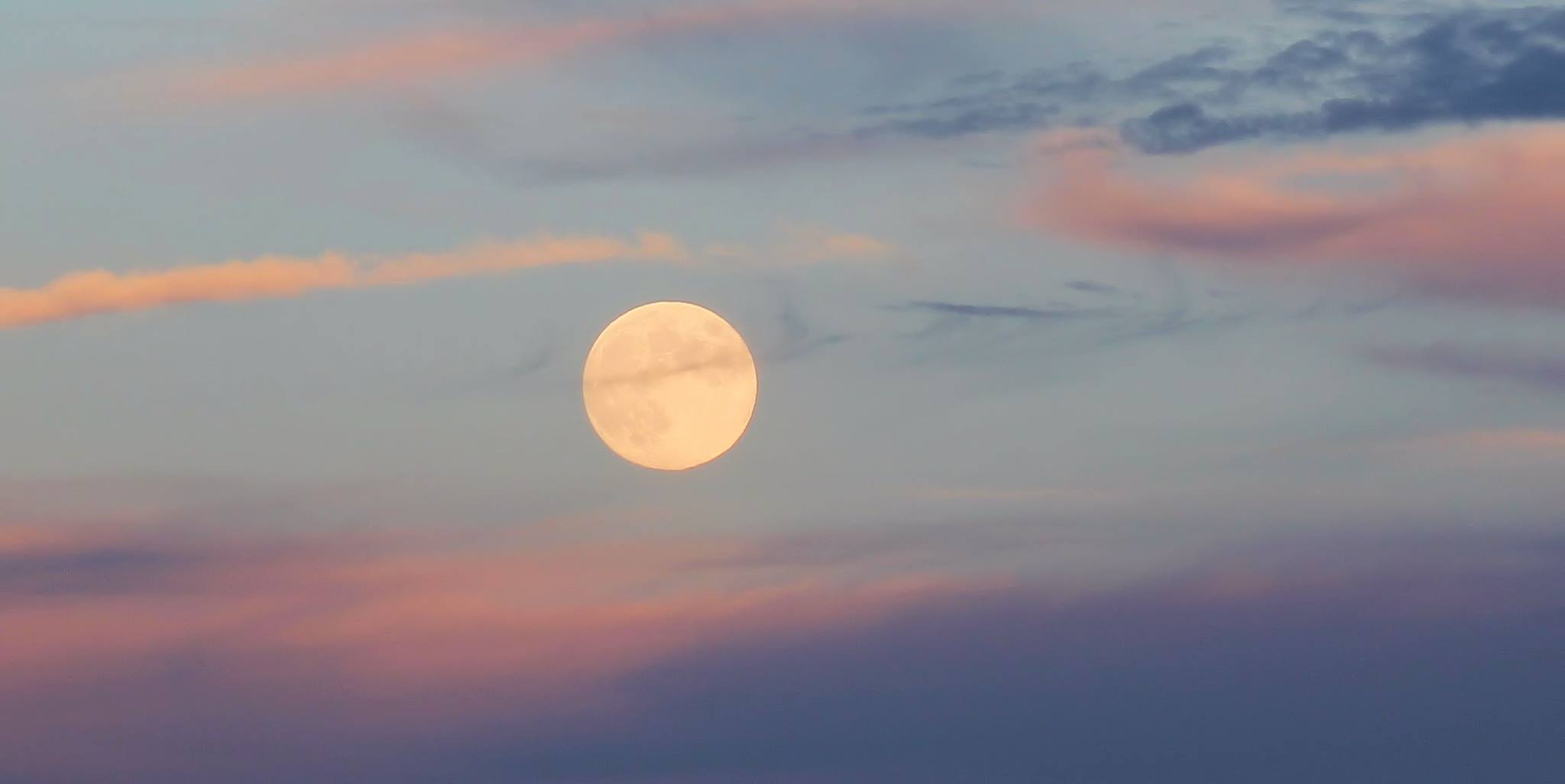
We drive the lake perimeter home, all traces of fire dissipated, until I look back at forest growing distant. A naked moon glows, bold and sheer, in bare chested sky above the woods, strikes a new match and sets me ablaze.
Burn, she says, and carry on.
![]() |
| credit |
Friday, July 3, 2015
How brave comes to be
I never once considered myself brave. Some people, I think, are born into it and others meet it face to face in a turning point moment, when the scales tip and they plunge headlong into courage. But me, I've baby-stepped my way into bravery. One foot and then the other, day after day after day, for months now. Until in one day, one moment, with shaking hands I force my quivering voice to steady and speak, to shatter a terrible silence.
I did that today, with a male customer who has spoken words and given looks and caught us in embraces that, for at least a year now, have made our skin crawl. And we have swallowed it, absorbed it, with indignation and that lingering self doubt we've been taught as women in our culture. Maybe we're over-exaggerating. Maybe he's just dense. Maybe he doesn't mean them the way they sound. Maybe he's just touchy feely.
Until, no. Not a second more could I bear to swallow this pill, bear the violation of self and others. And so I looked him in the eyes and spoke, watched him as the one squirming and flushing and walking away embarrassed. And I was glad that finally, yes, finally, I spoke up.
I wanted to run whooping through the store, for now, the magnificent reality of who I have become settled upon me.
I am brave.
* * * * *
It's been a hard won bravery.
And I can't tell you where it started, some while back. But that first time I stepped into my counselor's office and wound up crying in the bathroom stall afterward, knowing I was crossing a threshold and it was painful and scary, holy and good; yes, this, perhaps, was a first step.
And in the months to come, staring down the questions of faith that had haunted me a long time. The anxiety trailing me. Letting myself fall into the questions, sit with them and come unraveled. To allow myself to wonder if this tower of beliefs, like a game of Jenga, could withstand another piece pulled, or if it might all topple for good. This was the bravest thing I'd ever done.
Bravery came in slowly, like shards of light, as I learned to stare into the darkness and to parce through the guilt and fears. To find my own voice among them, and here, to know the difference. To find, in the unraveling, that here is the Divine Presence and I am held and we are good. Yes, this is bravery.
Here, all these steps, all these bricks laying a new foundation of courage in my soul. I have found my voice. I am finding my voice, still.
I am finding it in facing where I've come from and altering where I go from here. And I'm finding it in the trenches of marriage, the vulnerability of keeping my heart open in the midst of deep pain and hard-to-see hope. I'm finding it in setting new boundaries and holding to them, pushing aside guilt even as it presses from my belly up to my chest, that old onslaught of self doubt and accusation that says to have a self is selfish. That to not meet people's needs, even at the expense of mine, is unloving.
I'm learning to open my mouth and speak from my heart words that are tough and clear and laced with grace. To risk rocking the boat, even to the point of losing friendships, losing respect, being misunderstood. I'm finding courage in no longer hiding who I am.
And here, I'm learning I'm not responsible for keeping other people comfortable.
* * * * *
Months back, I was heading into a difficult weekend and had to coach myself, with deep breaths, into going through with it. I packed a pair of earrings I had painted, goofy looking birds on bottle caps, with a word on each one: Be Brave. I wore them, not only on my ears but on my heart all weekend long, and now, each time I need to coach myself to courage, I put them on.
I wore them the weekend I headed across country with five women, four of them I'd never met, to attend a writer's retreat far outside my comfort zone. I came home with a new little tribe of friends who continue to inspire me to greater bravery and love.
I wore them last week, when I posted my story of learning to love without strings and the journey of affirming same-sex marriage and homosexuality. Because I knew there might be harsh words, or just as painful sometimes, silence. And I needed to remind myself of who I am regardless.
And when I contacted an author I admire, who lives in Seattle, and inquired about her being my writing coach - and she responded yes - and my mind hissed back at me, What the hell have you done now? You're not good enough for this! And I took some deep breaths, told my mind to take a flying leap and stepped forward to jump off the cliff anyhow, wherever I may land.
And when I called Animal Control to report neglect of a dog I found wandering last weekend and returned to his owners, who are neighbors, and worried if this was the right thing to do, even as I knew that it was.
And when I gave myself permission to step back from a friendship of many years and let my heart recover from the pain of multiple hard conversations and not being heard, even as I shook inside and cried at the tearing of it all, and prayed for grace to light the way through.
You're brave, I whisper to myself these days. I'm proud of you.
These are not words that have come easy, goodness no. But here they are now, settling in to stay, a beautiful echo in my soul.
So, too, may you hear this echo grow in your soul, in your own brave steps, whatever they may be.
Wednesday, June 24, 2015
My long walk to Pride
![]() |
| photo credit |
![]() |
| photo credit |
This is not a story I sat down and wrote in an hour or a week or a year. It's the kind that's been writing itself on me for longer than I've known to pay attention. My journey to love without strings.
Here's my honest confession: there's no way to write this story without stepping on someone's toes on either side of what is painfully still a deep, inflammatory divide. There's no way to tell where I've come from without hurting gay friends who may read this and, perhaps, feel betrayed that I ever stood where I once did. And there's no way not to offend friends and family and other readers who resonate more with where I used to be. It requires an inordinate amount of grace from all of us, grace to myself, and some amount of grit and courage in admitting where I've been and where I now find myself. And in the end, knowing I'm tired of cowering when it comes to things that burn like a fire in my bones, regardless of the response or lack of it.
I can no longer be silent. Because, friends? People are dying because of this.
And the thing is, it's no longer only a matter of theology, as the rag tag Jesus follower that I am, and all our differing interpretations of obscure references to homosexuality in sacred texts. It's a matter of justice. It's a matter of impact.
It's about looking deep within ourselves and challenging our definitions of love.
* * * * *
You see, this week is Gay Pride week here in Seattle. It's honestly not a festival I've paid much attention to in my fourteen years of living here, except for knowing what times to dodge the crowds. And for many of those fourteen years, feeling discomfort gnawing at me regarding people I didn't understand in the slightest. I wouldn't have called myself a homophobe - I had gay coworkers I hung out with on occasion as the only straight person in the bunch, and I felt genuine care for them and enjoyment of their company - but deep down, I rumbled with tension over my quiet beliefs toward homosexuality and what it looked like to love and be in relationship with gay friends in light of those beliefs.
I felt I lived a double life. I lived in dread of ever having The Conversation about homosexuality with gay friends or customers, doing all I knew to do to communicate love and respect while privately holding the belief that, as a follower of Christ, I could not support what is commonly referred to among evangelical Christians as the homosexual lifestyle.
* * * * *
I remember sitting across from a respected friend of mine some years ago when she shared her coming out story with me. I was completely thrown off guard. Nearly three decades of my religious upbringing had taught me, in explicit and implicit ways, that being gay was wrong, gross even. I'd been indoctrinated in "Love the sinner, hate the sin," a phrase that now makes my skin crawl. And here I was, hearing that someone I knew and loved and respected as a person of faith was gay.
My theology, at the time, did not allow me to respond to this news without a great deal of inner anxiety. I did not possess a worldview, faith, or view of God that encouraged me to question outside the clear-cut lines I'd seen drawn. Even though a growing part of me ached to. Even though sitting here, listening to her story, trying to piece together the notes that rung in discord within my heart, I felt myself tear in two. It was the early stages then, but I was feeling less comfortable in the skin of my religious beliefs.
Oh, the tension! Love, but remain detached from her identity change. Love, but do not communicate interest in these changes or acceptance of them. Love, somehow making her feel she is supported without supporting her lifestyle.
So, I did the only thing I knew to do. I listened, trying not to convey my tortured insides, and probably made a few vague, empathetic statements like, "Wow, that sounds hard," but mostly remained quiet. I couldn't say, "I'm happy for you" or "I'm proud of you." I distinctly knew this was not the time, if ever there would be a time, to say, "I love you, but I don't accept this." So I said it very, very quietly through all the things I didn't say or do to show my support for her. All the ways I silently refused to be open and curious about her life and romantic relationships and her deepening sense of joy and contentment in embracing herself as gay.
Let me just go ahead and tell you how that worked out: it's a fucking exercise in futility when this is what love looks like.
Over time, I think, our scope of safe topics to discuss in friendship became so small as to not fit much of her in them anymore. After all, you can only divorce someone's sexuality from who they innately are for so long before realizing it's woven into every piece of their lives.
No matter the deeply genuine intent of my heart to love her - truly love her - the impact was to minimize her.
* * * * *
I wrote something on my blog, more than three years ago, about my intent to love liberally, even though I identified with more conservative beliefs*. Including my inability to support gay marriage. It felt liberating and terrifyingly brave, at the time, to write those words in the place where I live. And even though I wrote them edged in grace, and even though they resonated with the bulk of my evangelical readers, they wound up being read by my friend who is gay. And they angered and wounded her.
I invited her and her now wife to our wedding shortly after and never heard back from her.
Months passed, and finally, a message showed up in my email. She found the words and courage to share her anger and hurt with me. And while initially it stirred my defenses, as I sat with her voice, her words, they began to seep through those defensive places, right down to my heart.
Because, deep down, even though I was still formulating words and shifting beliefs, I knew she was right. I knew, on some level, I was wrong. But a change of belief that deeply ingrained does not happen in a wild jump, at least not for me. The most I could do was listen. Ask for forgiveness. Search out and read or listen to other stories told from the experience of what it's like to be gay, bisexual, transgender or queer in a world that has not largely been kind and receptive to these voices. Open my heart to the possibility of being wrong about homosexuality, of not having black and white answers, as I'd been taught.
I came to see, with a lot of time and wrestling, that I did not have to be confined or defined by the system of beliefs I'd grown up in. If I was no longer convinced, on this issue and others, these beliefs measured up with the ways of love, I could choose a different way. I could stand up and confess: I've been wrong.
* * * * *
It was right around the time that I decided I was done with traditional church and Evangelicalism that I had my first real taste, small as it was in comparison, to what it's like to be on the receiving end of a Christian friend's conditional love. My husband and I were called out by this friend on our lack of commitment in church attendance, among other things, in what was a very well-intentioned manner. But it reeked of judgment. It left this taste in my mouth: You are loved, insofar as we attend the same church and see eye-to-eye on things of a biblical nature. You are loved, insofar as your beliefs and who you are don't make me uncomfortable.
With all due respect, I wanted nothing more to do with this sort of love. I began to see myself as the one, unwittingly, however well-intentionally, spreading this gospel of love for so many years. With all due respect toward where I've come from, I wanted nothing more to do with propagating this manner of love.
It was here I began to see: intent does not trump impact. No matter how good someone's intentions are to love, if the impact is the opposite of love, then it is not truly love. It's just not.
No matter how much we protest that love is the driving force behind our theology, if the fruit (or impact) of any theology is alienation, insecurity, judgment, fear, minimization or reduction of a person, oppression or compartmentalization - it is not love. It's just not.
If our theology stems from words on a page - even pages we consider sacred - and yet is detached from relationship with the flesh-and-blood people whose realities we are taking a bold stance on, it is lifeless.
If our theology is not open to being shaped by the narratives of the ones who are not finding welcome in our communities of faith, it is stagnant.
* * * * *
This road has been long, my friends. I have scars to bear from the journey, and I have also been the one to leave scars on people's hearts. It has taken years of soul-searching, years of reading and listening and questioning and sitting in the unknown. It has taken laying down my defenses, laying down my limited understanding of scripture, laying down my need to be right, laying down my fears of the disapproval of others as my views have changed. It has taken forgiving myself and forgiving the Church, our great failures of love, and receiving forgiveness from one of the ones I've wounded. It has taken being on the receiving end of criticism, of judgment, of rejection, of losing friendships, of being misunderstood, for being true to who I am.
But I am here.
And I want to weep at the grace of it all, for truly I have never felt so freed to love as I do now. To know with a conviction that transcends the tits and tats of so many theological debates: love trumps all.
So I look forward to Pride week for the first time. To honoring the lives and stories, the joys and heartaches, of those I know and love in the LGBTQ community. I enter it with a sense of grief and profound gratitude, for the suffering they've endured, the victories gained. For the forgiveness I've been shown. For the freedom to walk together.
* * * * *
* The blog post in reference has since been deleted. Though it reflects my journey of transformation, I have no interest in causing additional pain to those it disrespects.
I've intentionally left out specifics of how my understanding and interpretation of passages in the bible regarding homosexuality have changed. That is beyond the purpose and scope of this post and has been much more articulately, thoughtfully addressed by people more qualified than myself. Like, actual LGBTQ people, and those who love them well. But here are a few good places I've found, if you're interested (because the best way to enter a conversation, I've found, is to open-heartedly listen):
Dan Bravo's "I'm gay. Other people are, too. Let's move forward."
Rachel Held Evan's "The false gospel of gender binaries"
Open letters between Heather and Vikki
An Evangelical pastor at his first Pride parade
The writings and mission of Soulforce
Saturday, June 20, 2015
When finding our voice is a meditation
![]() |
| photo credit |
A dear friend told me her recurring childhood nightmare, of opening her mouth to scream and no sound coming out. Of being rendered voiceless. But this nightmare betrayed her waking reality, as a girl growing up feeling unheard, seeping in to haunt her dreams at night.
I wept when she shared this with me. For her as that little girl with the soundless scream. And unexpectedly, for me as a little-girl-now-grown-woman who is still learning to open her mouth, let alone project her voice. To name her needs, her hurts, her anger, her fears, her desires. I was - and still am - the girl who muffled sobs in her pillow, trying to contain sound before it reached someone’s ears. Who learned, for one reason or another, to make herself smaller, quieter, more agreeable. Who learned to read everyone else's needs and not her own.
You see, I was nearly born a listener. But I’m just now practicing how to speak from the depths of me, without editing and cushioning words until my voice is swallowed.
* * * * *
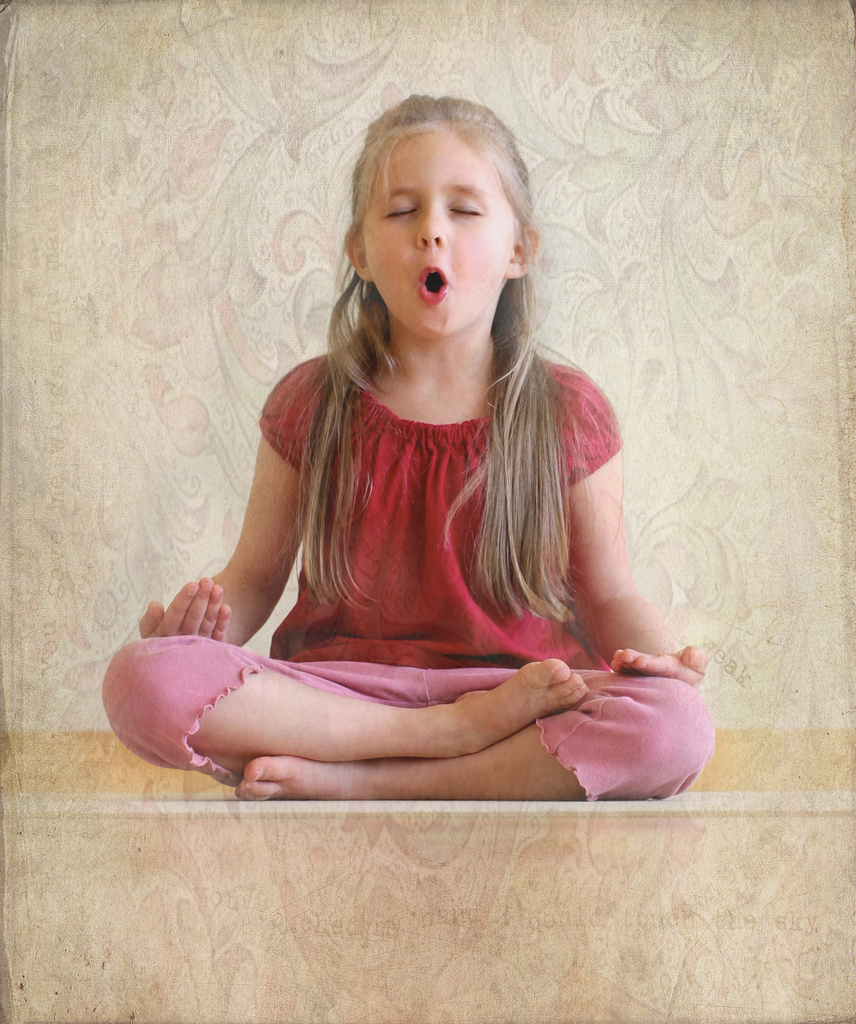
Finding our voice begins, as yoga meditation does, on the mat. That place where we are fully present, coming home to ourselves. That thin cushion between our sit bones or the soles of our feet and the earth, which holds us up, and our awareness of our full weight bearing down upon it. Or just as likely, it can begin in child’s pose: face down, fully resting pose, arms outstretched in surrender. Here, with eyes closed, we’re ready to come awake.
It starts as a flutter of knowing. An awareness of heart beating, blood pumping, emotion coursing through veins and pathways of flesh and bone. We are a cauldron of life and we are starting to pay attention. The way we begin to listen to what our bodies are telling us, we scavenge for words to pair with feelings, to give form to the opaque masses. We call forth words from the deep of us in the form of breaths and our chests expand and contract, ever lengthening as voice emits. Even without words, the sound releases courage in vibrato.
The breath, the word, the voice generated from deep in our bellies slows, slows, slows - and we expand.
This finding our voice is a journey of curves, high arches and low dips, not lines drawn in perfection from here to there. It’s a bending and a stretching, a bowing and a rising, a breaking and a mending, an opening and a lifting of our hearts upward. It’s an unfolding into vulnerability, to that very real pain of being unheard, unseen, misunderstood. It’s an unstifled cry, a scream that empties our lungs and fills us back up again, a plea from vocal chords on fire. It’s anger and forgiveness, learning when to hold position and when to release.
It’s a merging of body and soul, our past and present selves, cradling us in the now as we forge the way of becoming.
We practice breathing-speaking in the daylight and in the dark. It matters not because when our eyes are closed we see more clearly, lit up from the inside. Still, we light our candles, turn our mats to face new directions, open windows and prop our backs against the walls. We balance, we fall, we bruise, we rise again.
We gather words in breaths of quiet strength, and open our mouths.
Joining these words with the Kelly and the Small Wonder community
Friday, June 5, 2015
From outward momentum to inward momentum: living the artisan way
"The creative act began
with God creating the universe in which we live.
The next creative act begins
when we allow God to re-create the universe within us."
Erwin McManus, The artisan soul
I began the headlong plunge into midlife crisis at the ripe old age of twenty-seven. Literally on the cusp of finishing two years of intensive graduate work and training - weeks away from launching out into the nitty-gritty pursuit of fleshing out the dreams I'd worn myself into the ground for - my dad died unexpectedly. And with him, the framework of my life and all I'd become to that point, fell with a deafening roar.
I remember, some time after, writing at a coffee shop near work when an old customer walked in. A man with whom I'd resonated in our fairly brief interactions, drawn to the depth of knowing in his eyes. He'd walked through pain. I invited him to sit down with me and, in the course of our conversation, he shared words that haunt me still. Somewhere in the midst of walking through the darkness of his own midlife crisis, a number of years older than mine, he'd commissioned an artist to do a painting for him.
"Paint me a picture of the moment in a man's life when he realizes all his young man dreams will not come true."
He described the painting to me in heart-wrenching detail. The man cradling his face in his hands, red dominating the canvas. But it's the words I've never forgotten.
I was already living into that moment. And I lived into that moment another five or six years years before it truly sunk in: losing some of those younger woman dreams, in some way, saved my life.
* * * * *
Prior to losing my dad, the reference point of the most transformative season of my life, I was a bit of a mystery to even my closest friends. I lived with all my guts securely locked up and only occasionally, with painstaking self-control and intention, made them visible to a very few. I'd mastered what I later came to call the "illusion of vulnerability." I knew how to say as little as possible, enough to appear I was being revealing, to make the other person feel I'd bared my soul. I never, and I mean never, broke down and cried in front of anyone, unless it fell under the category of Worship or God Moments. Those were safe, because they were really spiritual and not about my humanity (or so I compartmentalized it).
But there came a moment, in the ICU, staring at my comatose Papa hooked up to a respirator, when I could no longer outrun emotion. I didn't have enough fingers, any more, to reach and plug all the cracks that threatened to leak all my insides in a mighty, terrifying flood. And for the first time, I didn't fight it. For the first time, I began to allow people to witness my anguish, unedited.
I gave them a peek into my brokenness.
And therein began this long, beautiful journey to authenticity and wholeness. To becoming fully human.
* * * * *
Whenever I come across someone I haven't seen in awhile, someone who used to know me and doesn't anymore or never knew me at all, I can imagine what crosses their minds in our brief catch-up conversations about life. I went from someone with admirable, active life pursuits to someone who seems, by cultural standards, to be going nowhere. From top of the class in grad school to over six years at Starbucks and no ambition to work in my field of study. From passionate-worship-leader-Jesus-lover to happy-church-drop-out (still Jesus-lover, of a different sort).
I went from outward momentum to inward momentum. From performing to being. From striving to resting.
It's no wonder I cringe at the thought of attending reunions of any kind. Few people have a grid for the types of conversations where the stuff of a life is more about how we're coming into the fullness of who we are instead of the outward manifestations of identity: career success, marital happiness, children, houses, vacations, positions of leadership or church-sanctioned ministry, physical achievements. I'm still figuring out how to explain to most people that the things that make my life eventful, or not, are the things happening below the surface. The things that feel too sacred to bring into casual conversation, too vulnerable to share with anyone who doesn't really want to know your heart.
How do I explain to anyone who simply hasn't been there that the apparent lack of movement in my life belies far more seismic movement in my inner life, in my soul? That my priorities, beliefs, faith, relationships, identity - my universe within - are being utterly re-created. That the work I am putting my hands and heart to is the work of living my entire life artfully, wholeheartedly, and cannot be reduced to what I do for a paycheck.
I am almost unrecognizable from that twenty-seven year old that finally crumbled in the ICU room nearly seven years ago. And thank God, honestly.
I have so little to "show" for my life in tangible terminology, according to what our society values and deems worthy. But year by year, the crevices of my soul are being excavated. Year after year of doing the painful work of pressing into the rough edges of suffering and coming more fully alive; of learning to trust the Master Artist who carves beautiful valleys out of utter collapse; of discarding anything about me that is false and saying yes to those places of truth; of heading straight into the fear and finding this is where courage resides; who I am is beginning to emerge, and you know what? I love her. I don't always love her well, but I am growing to love her more.
Because I don't know how to quantify her life, but I know that she is the real deal.
Subscribe to:
Posts (Atom)